Plant and Agricultural Biotechnology
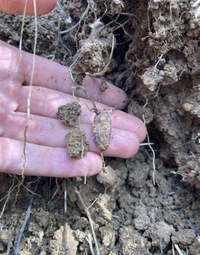
Matteo Da Ros
· Host Institution: Aardaia – Wageningen, Paesi Bassi
· Mobility period: august 2025 - december 2025
· Supervisor: Prof.ssa Sara Bosi
· Thesis title: Cracking seed dormancy in L. tuberosus: First steps in the domestication of the Aardaker
Matteo’s story
I became aware of the call for applications and informed myself about funding opportunities for my period abroad through the university's dedicated webpage. I chose Aardaua because about a year ago, I learned about the project in question through a YouTube podcast. Driven by concepts that I found very intriguing (durable innovation, domestication on-demand), it outlined compelling arguments for that was soon to become an entrepreneurial effort: this proposal, originally institutional in kind (drafted for a university grant), ultimately resulted in the creation of a start-up. The thesis deals with L. tuberosus, which is a perennial herbaceous plant possessing protein-rich, edible tubers. […] The present thesis documents an early attempt at its domestication, specifically during the initial phases of the crop cycle. Considering time-constraints and aiming for optimal allocation of company resources, these challenges were mainly addressed within the scope of seed technology (breaking dormancy, germination protocols, seed priming). However, the importance of a complementary seed genetics approach and its subsequent integration into existing and future breeding pipelines was highlighted. To this end, a bibliographic search was conducted for key candidate genes implicated in the absence of seed physical dormancy, and putative physiological markers for the same were hypothesized. Among the activities performed, I participated in company operations in the field and greenhouse (emasculation and controlled crossing, sowing and transplanting, harvesting, phenotyping, storage testing, etc.); an expedition to collect wild accessions; development of seed technology protocols (germination and vigor assays, scarification techniques, and seed priming); and bibliographic research to identify gene targets. During my stay I supported lab technicians, autonomously operating industrial nursery equipment, and coming up with data structures and knowledge systems to fit representational needs. I was constantly faced with time-constraints and priority management challenges, and I experienced the frantic pace and shifting needs of a start-up. Interdisciplinarity and workplace autonomy were also valued. […] Being in a university town as a non-student was alienating at times, but the combination of both amateurism and the strong sense of accountability within the company compensated for all of this.
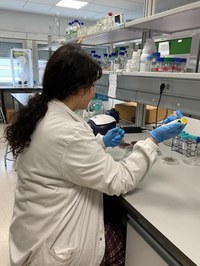
Carolina Garofalo
Host institution: University of Valladolid, Spain
Mobility period: July 2025 – January 2026
Supervisor: Prof. Elena Baraldi
Thesis: Production and preliminary in vivo evaluation of dsRNAs targeting the pear brown spot pathogen Stemphylium vesicarium in the context of the SIGS approach
Carolina’s story
I learned about the call for applications thanks to my supervisor and through a notice sent to my institutional email announcing its opening. Thanks to Prof. Elena Baraldi, I developed a strong interest in further exploring RNA interference techniques. We considered the possibility of developing a thesis on this topic specifically at the University of Valladolid, which boasts numerous successful publications in the field of RNAi.
Pear brown spot, caused by Stemphylium vesicarium, represents a threat to agricultural production. RNA interference is a promising and sustainable strategy for pathogen control […] This work represents the preliminary phase of a project aimed at improving the stability and uptake of dsRNA.
I carried out experimental laboratory activities and bioinformatics analyses. I worked on identifying gene targets potentially involved in the pathogenicity of the fungus and on designing the corresponding dsRNA molecules using bioinformatics software. I then produced dsRNA in vivo using a specific strain of E. coli. I performed dsRNA purification through specific extraction protocols and conducted an in vivo assay by applying “naked” dsRNA directly onto pear fruits to assess a possible reduction in lesion development.
I acquired new technical and methodological skills related to molecular biology applied to plant protection, as well as developing analytical and practical abilities. […] The university environment proved to be welcoming and international. I would choose Spain again as a destination. Valladolid, in particular, is a student-friendly city, well served and easy to get around both on foot and by public transport.
This experience had a significant impact on my personal path: it allowed me to consider the possibility of undertaking another experience abroad in the future, and I was able to improve my English and learn the basics of Spanish. I recommend that everyone spend a period of training abroad, although greater financial support would make it more accessible to a larger number of students.
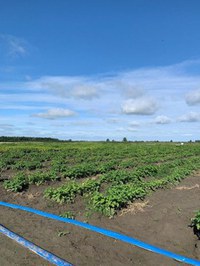
Fabiola Fogliata
Host institution: Wageningen University, Netherlands
Mobility period: July 2025 – December 2025
Supervisor: Prof. Paolo Bernardo Trost
Thesis: Nitrogen Response and Genotypic Variation in Potato (Solanum tuberosum, L.) under Variable Water Conditions
Fabiola’s story
I learned about the call through emails sent by DISTAL Internationalization. I chose Wageningen University (Netherlands) as my destination, mainly because of the proposed project, which fascinated me from the very beginning, as I was already aware of the university’s importance at the European level and of the project itself, CropXR. I was able to develop both knowledge and practical skills in the laboratory as well as in fieldwork, both of which were completely new to me. […]
This study, carried out in collaboration with Wageningen University and the CropXR Potato project, aimed to evaluate how different levels of nitrogen (N) and water (W) affect growth, biomass, and nutrient dynamics in four commercial potato varieties. Four levels of nitrogen fertilization (N0–N3) and different water regimes (W0–W2) were applied to explore various genotypic adaptation strategies and resource-use efficiency. […]
The results indicate that, in potato cultivation, the N2 level (150 kg N ha⁻¹) maximizes yield and nutrient uptake while avoiding inefficient excesses. The differences observed among genotypes suggest the importance of selecting varieties with higher efficiency. […] Improving nitrogen use efficiency (NUE) through optimized fertilization and appropriate varietal selection contributes to more sustainable potato production. These results provide useful insights for future breeding programs and for the development of cultivation systems.
During the mobility period, I carried out both field and laboratory activities (chemical laboratory work and material preparation). In particular, I acquired new knowledge, especially in field activities, and in the advanced use of software such as R for data analysis. I would definitely do this experience again and recommend it. In general, international mobility experiences are very valuable and allow for a broader perspective on opportunities that might otherwise not be considered. Interacting with people in an environment outside of one’s comfort zone certainly helps personal growth.
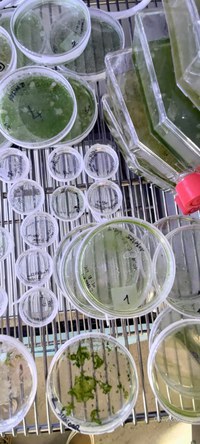
Clelia D'Agostini
Host institution: University of Galway, Ireland
Mobility period: February 2025 – June 2025
Supervisor: Prof. Paolo Bernardo Trost
Thesis: Developmental Biology and Cultivation Optimization of Marine Green Macroalgae (Ulva spp.): From Gametogenesis to Mutagenesis Applications and Nitrogen Metabolism Studies
Clelia’s story
I learned about this opportunity thanks to the professors in my degree program, who presented the call during lectures, emphasizing the importance of international experience for both academic and professional development. I chose Galway because Professor Silvio Salvi, the coordinator of my degree program, had already established strong collaborations with researchers at the local university laboratory. […]
During the mobility period, I carried out several research activities both in the field and in the laboratory. I conducted sampling in natural environments, managed algal cultures in controlled growth chambers, and performed experimental data analysis. Laboratory activities included: sample preparation and weighing, DNA extraction, microscopic observation using different types of microscopes, tissue staining techniques, and sectioning of algal samples. I also actively participated in the design and setup of experiments, regularly presenting results during the research group’s lab meetings.
The experience proved to be extremely valuable; I gained autonomy and advanced skills in laboratory methodologies and experimental protocols thanks to the supervision of Dr. Serena Rosignoli. Furthermore, immersion in a multicultural environment allowed me to develop intercultural skills and broaden both my academic and personal perspective through interaction with colleagues of different nationalities.
I highly recommend this experience for its comprehensive educational value. It offers the opportunity to build international professional networks, develop transferable skills, and gain a global perspective that significantly enriches one’s academic path. However, I believe that increased financial support from the University would be desirable.