Precise and Sustainable Agriculture
Testimonials from Master's students in Precise and Sustainable Agriculture who were awarded the 'Thesis Abroad' grant.
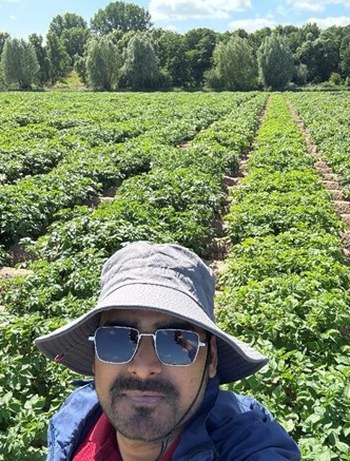
Sarjit Pandey
- Host Institution: Leibniz institute of plant genetics and crop plant research - IPK, Germany
- Mobility Period: May 2025 - October 2025
- Supervisor: Prof. Dario Mengoli
- Thesis Title: Potato Late Blight Resistance Phenotyping Using UAV-Based Multispectral Imaging
Sarjit's Story
I heard about this call during my classes, and I had always planned to apply for it. I chose this destination because the research topic closely matches my interests and career aspirations and IPK is one of the best-known research institutes in this field. Potato (Solanum tuberosum L.) is the fifth most important food crop globally, yet late blight (Phytophthora infestans) remains its most destructive disease, capable of causing complete yield loss within days. […] This study proposes a UAV-based multispectral workflow for high-throughput phenotyping of segregating populations. Canopy reflectance traits and vegetation indices will be integrated with visual disease assessments (AUDPC) to build phenomic prediction models using statistical and machine learning approaches. The research aims to deliver a scalable, non-destructive protocol for identifying late blight-resistant genotypes, supporting sustainable precision breeding. During the mobility period, I first focused on planning the field layout. Then, I sowed 500 different potato accessions in the field. After that, I worked on weeding and intercultural operations. I also collected data on the germination rate, flowering days, and disease resistance scores. I also used UAV-based data collection with a multispectral camera to collect imagery. The work finished with data analysis and report preparation. This experience taught me a lot, both technically and personally. I learned how to plan and carry out UAV flights, handle multispectral cameras, and follow field and lab protocols for late blight phenotyping. I gained experience in processing multispectral images (Agisoft Metashape), extracting vegetation indices (Python and QGIS), and analysing data statistically (e.g. in R) to link image traits with disease resistance. It also enhanced my teamwork and communication skills within an international research group, strengthened my English, and provided me with insight into German work culture, research standards, and everyday life abroad. I would definitely do it again and I would recommend it to other students because it helped me to shape my journey according to my aspirations.
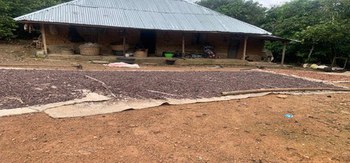
Rahmat Gbemisola Mustapha
- Host Institution: Federal University of Technology, Akure, Nigeria
- Mobility Period: August 2025 - October 2025
- Supervisor: Prof. Antonella Samoggia
- Thesis Title: Perception of Fairness in the Cocoa Value Chain: Insights from Smallholders Farmers in Nigeria
Rahmat's Story
I found out about the call while checking for opportunities on the Department’s website. I choose this destination because it is the best place to collect the data needed for my thesis. Nigeria is the fourth largest producer of cocoa in the world and Ondo state is the largest producer of quality cocoa in Nigeria. Federal University of Technology is a reputable university and Prof. Fasina’s research works aligned with my thesis study. The study was conducted to determine the perception of fairness in Cocoa value chain by smallholder farmers in Nigeria. Multistage sampling procedures were used to select a representative sample of 150 respondents for the study from 12 communities in Ondo State. Data were collected using a questionnaire. Data collected were analyzed with descriptive statistics involving frequency distribution tables, mean, standard deviation and percentages. [...] The results showed that farmers with high educational level, farm size and years of experience perceive fairness as unfavorable. The drivers to value addition by farmers in the cocoa value chain are access to affordable loans, Fairer Value Chain Governance, Strong Farmer Cooperatives and Networks, Training and Capacity Building. The study concluded that as farmers increase their farm size, they expected more from the value chain, but they do not see the results of increasing scale of enterprise. Also, the more experienced or longer they have been farming, this makes them feel that fairness is poor. After my arrival I learnt how to use the koboapp for data analysis and I visited the farmers in these communities for data collection with structured questionnaires using the kobocollect app. Data collected on the field was presented to my supervisor abroad and analysis was carried out based on data collected. I would recommend the experience to anyone willing to go abroad for their thesis research, and I would like to do it again. […] I choose Nigeria because my research aligns with my future career plans. I think been able to choose your preferred destination and the support by the school was superb and it should not be changed whereby you will be limited to where you can go.
Shruti Desai
- Host Institution: University of Minnesota, USA
- Mobility Period: December 2024 - May 2025
- Supervisor: Prof. Marco Maccaferri
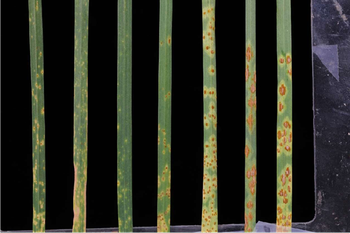
- Thesis Title: Advancing Sustainable and Resilient Agriculture through Genetics and Plant Breeding: A Comprehensive Study on Wheat Rust Characterization
Shruti's Story
I first learned about the call through an official email sent by DISTAL International Relations Office. I reached out to students who had previously taken part in this program to understand their experiences. Their feedback was extremely helpful. Additionally, I sought guidance from Prof. Maccaferri and Prof. Lucia Vanini and from international relation officer Dr.ssa Elena Santacroce who were all extremely supportive and provided me with more detailed information about the call. […] I chose the University of Minnesota because of its strong collaborative ties with the USDA-ARS Cereal Disease Laboratory and the presence of leading experts in the area of wheat rust resistance. […] This thesis project, aims to advance research in sustainable and resilient agriculture. The central focus of the research is on the genetic and phenotypic characterization of rust disease resistance in tetraploid wheat. […] During my stay at the University of Minnesota, I conducted research on wheat resistance to stem, stripe, and leaf rust, working on two key populations (GDP and TCC). Activities included planting, inoculation, disease scoring, and handling of rust spores in BSL-2 facilities. I also learned to use R Studio and TASSEL 5 for data analysis. Guided by Prof. Pablo and Prof. Brian, I gained practical skills in phenotyping, biosafety, and genetic analysis within an international research environment. I gained knowledge of wheat rust genetics and biosafety practices by working in BSL-2 facilities. I learned to analyze phenotypic data using R Studio and TASSEL 5, and became familiar with advanced research infrastructure. Collaborating with an international team improved my communication and organizational skills and both my technical and soft skills, and strengthened my motivation to address global agricultural challenges related to sustainability and climate resilience. I would absolutely recommend this experience and would gladly do it again. It has been one of the most enriching parts of my academic journey. […]
Rashmi Aryal
- Host Institution: Leibniz Institute of Plant Genetics and Crop Plant Research, IPK-Gatersleben, Germany
- Mobility Period: September 2024 - March 2025
- Supervisor: Prof. Marco Maccaferri
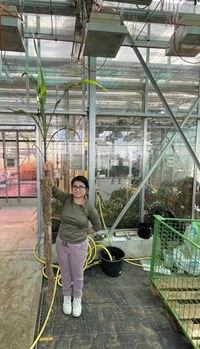
- Thesis Title: Investigation of root system architecture traits in a Triticum turgidum Tetraploid wheat Core Collection (TCC)
Rashmi's Story
I first learned about this opportunity through the course website at enrollment, but I fully understood it after our coordinator's detailed explanation in class. I had been working on root system architecture in Professor Marco Maccaferri’s lab since I began attending lectures on Plant Genetics. […] This exposure motivated me to conduct an experiment on root phenotyping for my master’s thesis. […] Professor Maccaferri recommended the Leibniz Institute of Plant Genetics and Crop Plant Research (IPK), which is renowned for its advanced automated phenotyping platform and exceptional research team. […] During my research, I performed root hair phenotyping on 475 genotypes, assessing root hair density and length. Additionally, I conducted a genome-wide association analysis using the Illumina 90K wheat SNP, carried out high-throughput phenotyping (HTP) with automated daily imaging in a rhizopot setup, and analyzed root images by defining the region of interest (ROI) for each pot. I have gained expertise in root hair research, including germination, rollups experiments, and microscopy imaging. I have hands-on experience with a high-tech phenotyping platform and proficiency in ImageJ for root studies and R Studio for data analysis. My skills also include working in controlled environments, handling chemicals, performing DNA/RNA extractions, and conducting field and greenhouse research, strengthening my practical knowledge in plant science. I would highly recommend this opportunity. It is an invaluable experience that provides deep insights into research. […] I gained a clear understanding of what research truly entails and how it is conducted in a rigorous scientific manner. Beyond the academic and technical learning, it was also an enjoyable and enriching experience. However, I believe that could be useful a training session for selected students. This would provide guidance on expectations, best practices, and key aspects to focus on, ensuring that participants are better prepared to make the most of the opportunity.
Shreyash Milind Khandwe
- Host Institution: George August Univesity of Gottingen/University of Kassel, Germany
- Mobility Period: April 2024 - October 2024
- Supervisor: Prof. Barbara Paladino
- Thesis Title: Optimising livestock nutrition in northern Ghana by accounting for seasonal quality variations in pasture vegetation and crop residues
Shreyash's Story
I’ve became interested in this Call thanks to the University Email. I choose Geroge August University of Gottingen because I was already at that university for the ERASMUS + Study program and I’ve mainly performed laboratories activities. I believe I have acquired valuable new knowledge and skills during this experience. I have developed strong relationships with the university and my supervisor, which has greatly enhanced my interpersonal and professional skills. Additionally, working in the laboratory has given me hands-on experience with various instruments, where I learned how to handle and operate them effectively. This experience has also deepened my understanding of different protocols and methodologies, improving my technical competence and confidence in applying them to my research work. I would definitely recommend this experience and would gladly do it again. It has been highly valuable for both my personal and professional growth. The opportunity to work closely with my supervisor and the university has strengthened my research skills and broadened my understanding of laboratory work and methodologies. However, if there is one thing I would like to see improved, it would be having more structured training sessions on using advanced laboratory equipment and analytical software. This would help enhance efficiency and deepen technical expertise.